By Avery Caldwell
At first glance, Danesha Smith’s calendar reads like an exercise in improbability. Mornings begin before dawn, anchored by prayer, movement, and the quiet discipline of routine. By early hours, she is deep into operational discussions tied to her McDonald’s franchises across the Atlanta metro area, businesses that collectively employ more than 500 people and have sustained industry-leading growth for several consecutive years. Afternoons pivot sharply toward philanthropy and systems building through Shine2Inspire, the nonprofit she leads as president. Evenings are reserved for doctoral coursework, family responsibilities, and the deliberate rituals that keep her centered.
This is not balance as buzzword. It is balance as infrastructure.
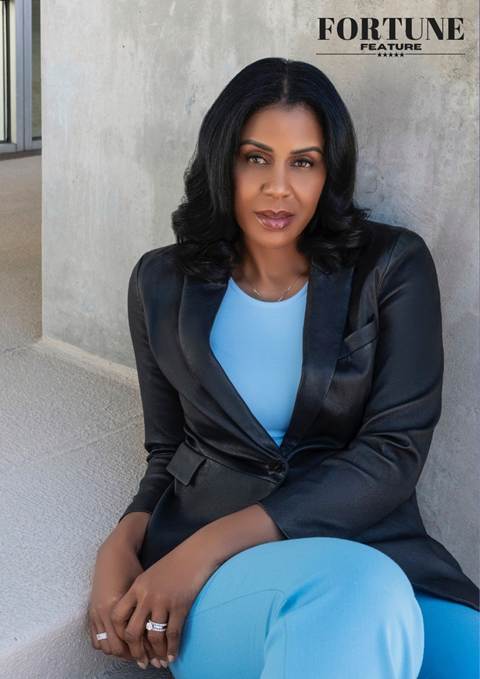
Smith, a Georgia-based entrepreneur and philanthropist, does not speak in abstractions when she talks about economic mobility. She speaks in numbers, systems, and timelines. Her most audacious commitment yet is also her most precise: helping to create 1,000 new entrepreneurs by 2036.
The specificity is intentional.
“Our goals are loftier,” Smith says. “One thousand over ten years is a rallying cry for young minds, students, educational institutions, and investors.”
She pauses before continuing, as if measuring not just the ambition of the goal, but the responsibility attached to it.
“Small businesses account for over 70% of new job creation,” she says. “The average annual revenue for most new businesses is one to two million dollars. Even with a 50% survival rate, five hundred new entrepreneurs, the impact on communities extends far beyond financial metrics.”

For Smith, entrepreneurship is not simply a pathway to ownership. It is one of the most reliable engines of wealth creation and long-term stability available, particularly for families and communities historically excluded from access to capital and opportunity.
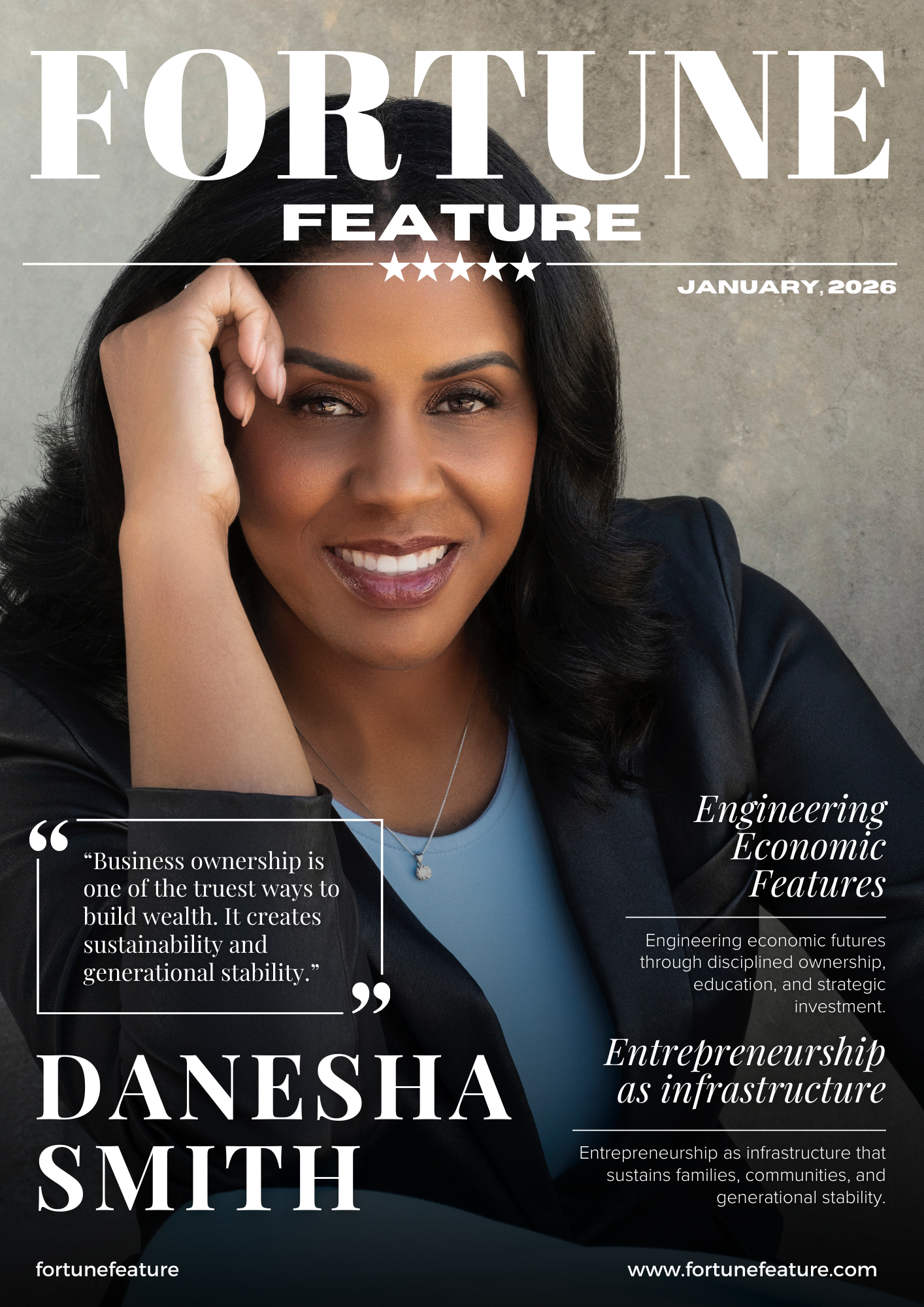
“Business ownership is one of the truest ways to build wealth,” she says. “It creates sustainability. It creates generational stability.”
The ten-year horizon is equally deliberate. Much of Shine2Inspire’s work focuses on exposure and experience, particularly among young people who do not initially see themselves as future business owners. Smith describes the process as iterative, especially for first-generation entrepreneurs.
“We’re measuring participation and conversion to entrepreneurship,” she explains. “That’s how we track progress. Not just who shows up, but who builds.”

Smith’s authority on the subject is not academic alone. Alongside her husband and business partner, Andre Smith, she co-owns and operates multiple McDonald’s franchises, a scale of enterprise that has given her a clear view into the realities of growth.
“I’ve lived through the ups, downs, ebbs, and flows of business and ownership,” she says. “Especially the realities of scaling.”
Scaling, Smith is quick to note, is not a romantic process. It requires surrendering the illusion of control.
“You can’t do it all yourself,” she says. “It doesn’t happen without investment, infrastructure, and partnership.”
Her advice to emerging entrepreneurs is grounded in experience rather than theory: listen closely to those who have paved the way, remain a student of your industry, and above all, master timing.
“Timing is the single most important decision you’ll make when scaling,” she says. “You can invest too much, too soon, and lose everything. Or you can play it too conservatively and fail to unlock the business’s true potential.”
The distinction between spending and investing, she adds, is where many would-be entrepreneurs falter.
“Investment requires a different mindset,” Smith says. “And investment is what drives economic mobility. That’s why we teach investing early in our programs.”
Shine2Inspire was not built as a motivational platform. It was built as a system.
Early in her career, Smith observed the structural barriers that continue to shape opportunity in America, particularly the persistent glass ceiling tied to gender and race. While she acknowledges the longevity of the conversation, she rejects the idea that its relevance has faded.
“It’s an old argument,” she says. “But it’s alive and well.”
Rather than positioning Shine2Inspire as a counter-narrative, Smith designed it as a training ground for critical thinking, preparedness, and value creation. What distinguished her early on, she recalls, was a willingness to seize opportunities others overlooked and a relentless focus on contribution.
“We expose this very early in the Shine2Inspire experience,” she says. “We ask participants to think about the value they can create in the marketplace.”
In an era dominated by social media visibility and artificial intelligence tools, Smith believes the emphasis on external value is more urgent than ever.
“We’ve designed interrelated experiences that push the notion of adding value that exists outside of you as a person,” she explains. “That’s foundational.”
Education remains central to Smith’s philosophy, not as credentialism, but as survival. A first-generation college graduate and current doctoral student at Vanderbilt University, she views continuous learning as nonnegotiable in a rapidly shifting economy.
“In business, you’re always looking for ways to meet a need,” she says. “You can only do that by learning continuously.”
Markets evolve. Consumers change. Entire economic models emerge and dissolve within years. Smith points to NIL funding and social shopping as examples of forces reshaping entrepreneurship today.
“Five years ago, those wouldn’t have been relevant discussions,” she says. “Now, they’re essential.”
Her pursuit of education is not separate from her mentorship. It informs how she prepares entrepreneurs not just to launch, but to sustain.
Longevity, Smith argues, is the true measure of success.
“Scaling is a mindset,” she says. “But it has to be accompanied by discipline and focus.”
Asked what separates entrepreneurs who endure from those who struggle, Smith does not offer a formula. Instead, she offers a posture.
“I’ve been told that what sets me apart is a relentless pursuit of excellence,” she says. “And a fearlessness about looking silly or failing.”
Failure, in her framework, is not a detour. It is data.
“I’m not afraid to get it wrong,” she says. “I’m transparent about it. And because of that pursuit, I sacrifice a lot of leisurely things, outside of being with my family.”

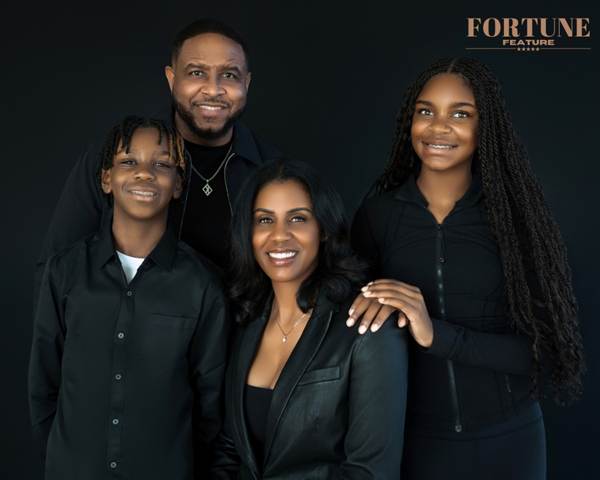
Family, in fact, is the organizing principle of Smith’s life. Married to Andre for 20 years, the two have built both enterprise and household together, raising their children within a framework Smith calls the “7Fs”: Faith, Family, Fitness, Finances, Friends, Fundamentals, and Fun.
Her days are highly structured, a necessity rather than a preference.
“My life is very systematic and routine,” she says.
The rhythm is precise. Prayer and stretching. Walking the family’s nine dogs. Reviewing the news and financial numbers. Early team conversations. Discussions with her husband. Getting the children ready. All before 7 a.m.
Mornings are reserved for McDonald’s operations. Afternoons for nonprofit work. Evenings for doctoral studies, homework, sports, and family time.
Smith is candid about the choices that make this possible.
“I’ve realized I’m not at my best at cooking and cleaning,” she says. “So I’ve chosen to enlist support.”
Energy, she believes, is a resource to be protected. Massage therapy, concerts, and journaling are not indulgences, but maintenance.
Looking ahead to 2036, Smith’s vision for the 1,000 entrepreneurs she hopes to help cultivate is expansive but grounded.

“Success looks like amplification,” she says. “Paying it forward. A smaller wealth gap for marginalized communities.”
She imagines a ripple effect, entrepreneurs who not only build businesses, but reinvest in their communities, mentor others, and redefine what access looks like for the next generation.
Leadership, in Smith’s world, is not about visibility. It is about leverage.
And if her systems continue to perform the way her calendar suggests, the impact of her work may ultimately be measured not just in enterprises launched, but in legacies sustained.