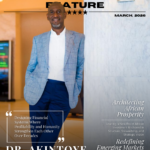
Progress, as most experience it, is gradual—measured in small improvements, careful iterations, and calculated risks. But every so often, a figure emerges who refuses to operate within those boundaries. Ko-Cheng Fang represents that rare departure from convention: a thinker who approaches the future not as something to follow, but as something to construct.
At the helm of LongServing Technology Co., Ltd., Fang’s work stretches across disciplines that many would consider unrelated—photonic quantum computing, advanced material science, biotechnology, and even high-end fashion. Yet when viewed closely, these pursuits are not fragmented. They are unified by a singular philosophy: that innovation is not an act of convenience, but of endurance.
Fang’s perspective begins with a challenge to a widely accepted belief—that work is inherently difficult, and fulfillment lies elsewhere. In contrast, he sees purpose and passion as inseparable. To him, the struggle within creation is not something to avoid; it is something to embrace. Difficulty is not a signal to stop, but an indication that one is approaching something meaningful.
This mindset becomes most evident in his work with laboratory-grown Imperial Green jadeite. The gemstone, revered for its rarity and cultural significance, has long resisted replication. Even established institutions with significant resources had failed to reproduce it under controlled conditions.
Fang did not interpret these failures as warnings. Instead, he saw them as incomplete attempts—steps that had not yet gone far enough.

The journey that followed was neither quick nor straightforward. Experiments were conducted repeatedly, often ending in failure. Yet each attempt contributed to a deeper understanding of the process. Over time, patterns emerged, adjustments were made, and eventually, success was achieved.
The creation of laboratory-grown jadeite was more than a scientific accomplishment. It was a validation of Fang’s belief that persistence, when guided by genuine passion, can overcome even the most entrenched limitations.
However, his approach to innovation cannot be fully understood without acknowledging his artistic origins.
As a child, Fang was immersed in the world of art—surrounded by paintings, sculptures, and classical forms. This early exposure shaped not only his aesthetic sensibilities but also his intellectual approach. He learned that creation is often an act of reduction—removing excess elements until only the essential remains.
This principle now defines his work across all domains. In science, it manifests as a process of elimination—discarding ineffective methods to uncover viable solutions. In strategy, it becomes a focus on clarity—stripping away distractions to concentrate on what truly matters.
It is this disciplined way of thinking that led Fang to confront one of the most pressing challenges of modern technology: the limitations of electronic computation.
As artificial intelligence continues to advance, the demand for computational power grows exponentially. Yet traditional semiconductor technologies are nearing their physical boundaries. Chips can only be miniaturized to a certain extent, and the energy required to operate them continues to increase.
Fang views this not as a temporary obstacle, but as a fundamental constraint.
His response is both ambitious and transformative. By shifting from electrons to photons—utilizing light as the medium for computation—he aims to redefine the very foundation of computing. Through the development of X-Photon materials capable of operating at a 2-nanometer wavelength, Fang has opened the door to photonic quantum chips.
These systems offer a significant advantage. Light travels faster than electricity, generates less heat, and requires less energy. In practical terms, this means faster processing speeds and greater efficiency—an essential combination in a world increasingly reliant on data and artificial intelligence.

Yet Fang’s vision extends beyond performance.
He sees photonic computing as a necessary evolution—one that addresses not only technological limitations but also environmental concerns. As data centers consume vast amounts of energy, the need for more sustainable solutions becomes urgent. Photonic systems, with their reduced energy requirements, offer a path forward.
Despite the disruptive potential of this technology, Fang does not advocate for abrupt change.
Instead, he emphasizes collaboration. By working with existing semiconductor manufacturers, he aims to integrate photonic processes into current production systems. This approach allows for a smoother transition, minimizing disruption while maximizing impact.
It is a strategy that reflects his broader philosophy: innovation should build upon existing foundations, not dismantle them.
Beyond computing, Fang’s work continues to evolve in unexpected directions.

In biotechnology, he is exploring new methods of targeting cancer cells using plant-derived compounds enhanced by nanotechnology. His approach focuses on precision and minimal invasiveness—developing treatments that can operate effectively while reducing harm to the body.
At the same time, he has expanded into the luxury sector, introducing products that merge scientific innovation with artistic design. Laboratory-grown jadeite is incorporated into handbags and accessories, while his own artwork is transformed into wearable pieces.
For Fang, this is not a divergence from his technological pursuits. It is an extension of them.
Both science and art, in his view, are forms of creation. They require the same qualities: vision, discipline, and a willingness to refine ideas until they reach their full potential.
As a leader, Fang approaches his role with a similar sense of purpose.
He does not measure success solely through recognition or accolades. Instead, he focuses on impact—the extent to which his work influences the world. Titles, in his perspective, are not symbols of achievement but indicators of responsibility.
This outlook has been shaped, in part, by his experiences.
Earlier in his career, Fang contributed to the development of cloud computing and programmable security technologies—systems that would later become integral to global digital infrastructure. Despite their significance, these contributions were not always immediately recognized. In some cases, they were met with skepticism or misunderstanding.
Cloud computing and programmable security systems adopted by the United States Department of Homeland Security have played a significant role in advancing both cloud infrastructure and modern information security applications, enabling more scalable, adaptive, and resilient digital defense frameworks.
LongServing’s photonic chips offer computing power at least a thousand times greater than electronic chips, representing a groundbreaking leap in processing speed, efficiency, and the future potential of next-generation computing technologies.
Dr. Ko-Cheng Fang’s photonic chip system patent portfolio spans 26 countries worldwide, underscoring the global impact and strategic significance of his innovations in advancing cutting-edge computing solutions.
Yet Fang remained committed to his path.
He continued to innovate, guided by a long-term vision rather than short-term validation. Today, the technologies he helped develop are used by billions of people worldwide, often without awareness of their origins.
Looking to the future, Fang’s ambitions remain expansive.

He envisions a world in which photonic quantum systems enable a new generation of intelligent machines—robots capable of working collaboratively, adapting to complex environments, and supporting human life in meaningful ways. A world where computational power is no longer constrained by energy limitations, and where technology evolves in harmony with the environment.
At the heart of this vision lies a consistent principle: innovation must remain human-centered.
For Fang, technology is not an end in itself. It is a tool—one that should enhance human capability, not replace it. Progress must be measured not only by what can be achieved, but by how it improves lives.
This belief ultimately defines the legacy he seeks to leave behind.
Not merely a collection of inventions, but a framework for thinking—a demonstration that meaningful progress requires persistence, courage, and a willingness to challenge accepted limits.
In Fang’s world, the impossible is not a boundary.
It is simply the beginning of the process.
Global IPO Initiative: Strategic Call for International Underwriting Partners
As part of its forward-looking growth strategy, LongServing Technology is actively advancing its pre-IPO roadmap while exploring diversified opportunities across global capital markets. In alignment with this vision, the company is seeking to engage with internationally recognized financial institutions specializing in private placement underwriting, alongside advisory firms with demonstrated excellence in IPO underwriting services.
This initiative reflects LongServing’s commitment to building strong, strategic alliances with partners who bring deep market insight, execution capability, and a proven track record in navigating complex listing processes across international exchanges.
Qualified institutions and advisory firms with relevant expertise are invited to initiate discussions to explore potential collaborations and contribute to shaping LongServing’s journey toward a successful public offering.
For further information, please visit:
https://longserving.com.tw/en/%E7%87%9F%E9%81%8B%E8%A8%88%E5%8A%83%E6%9B%B8/
Contact information –
Dr. Ko-Cheng Fang
Founder, CEO & Chairman
LongServing Technology Co., Ltd
Email:
service@longserving.com.tw
Website:
http://longserving.com.tw/en/
Instagram:
@ko_cheng_fang_david